Leasehold Estate Definition, Types, and Examples
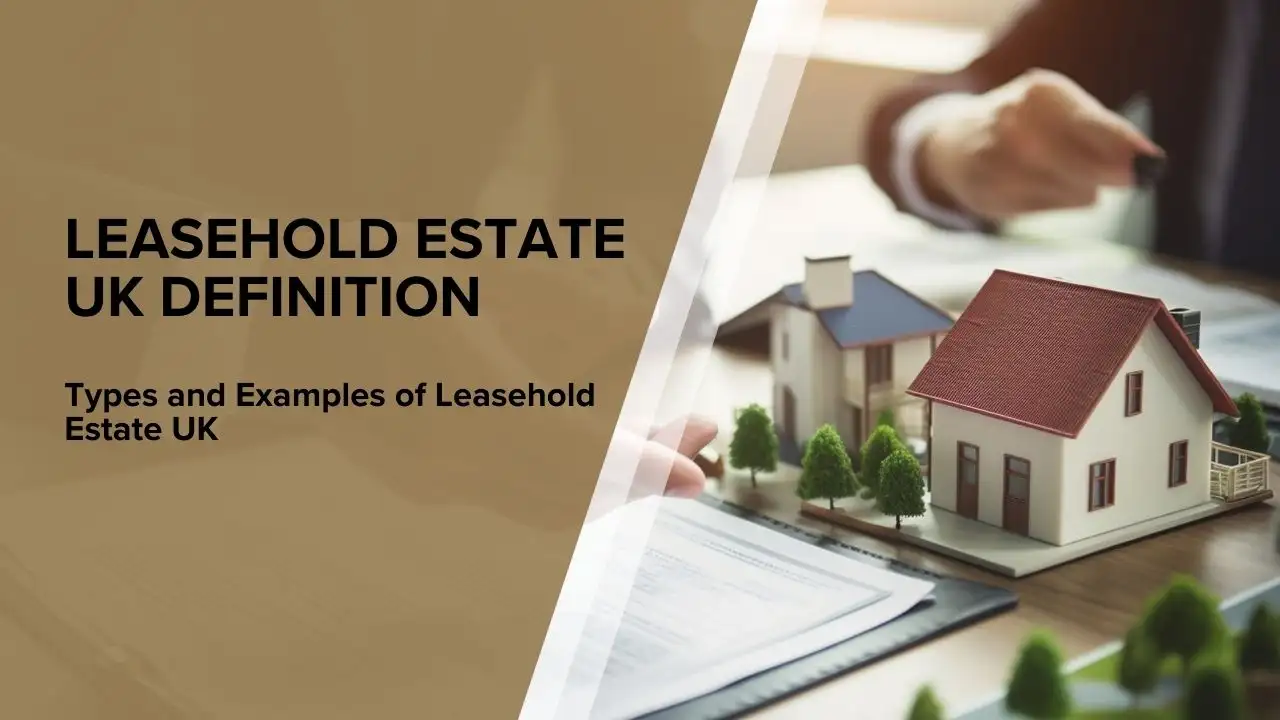
In the UK, the leasehold estate is a system that dates back centuries, currently governing millions of people, especially flat owners, who hold their homes. In a leasehold, you purchase the right to live in a property for a defined period, typically between 99 and 999 years, while a separate party (landlord) owns the land.
The Property Management Company provides a detailed explanation of leasehold estates, their various types, and recent legislative changes under the Leasehold and Freehold Reform Act 2024.

What is the Meaning of a Leasehold Estate?
In leashold estate, you buy the right to occupy the property for a fixed period of time. The leasehold is held by the tenant (Lessee), and the property owner who grants the lease is called leaser. This is the most common type of ownership in England and Wales. The lease is considered the tenant’s personal property, and the landlord provides the right of occupancy.
Lease Lengths
The term of the lease varies based on the property owner and the building structure.
- A person who purchases a leasehold house is granted ownership for a fixed period, such as 99 years.
- The lease length can be 125 years, which is standard for modern developments, and 990 years, which falls under the extension of the lease under leasehold reform 2024

Types of a Leasehold Estate
Leasehold estate in the UK is divided into four main categories, each with its own characteristics regarding duration and termination.
| Type of Estate | Duration | How it Ends |
| Estate for Years | Fixed period | Automatically at the end of the term |
| Periodic Tenancy | Ongoing periods | Notice by landlord or tenant |
| Estate at Will | No fixed period | By either party or death |
| Estate at Sufferance | After the lease ends | Eviction by landlord |
Estate for Years
An estate for years is a lease with a fixed period of time and is documented in writing. Despite the name, an estate for years doesn’t need to be delineated inyears.
- This type of lease can run for any fixed period of time, such as days, months, years or centuries. The tenant, during the period of the lease, is occupying the property legally.
- For example, when a property owner establishes a rental agreement with a tenant for a duration of one year, this arrangement is classified as an estate for years.
- Sometimes this agreement includes the option of renewal after the fixed term expires, yet it depends on what the lease agreement says.
Periodic Tenancy
Periodic tenancy is a lease where there is no termination date set, which continues automatically for successive periods.
- There can be a specific lease period, such as a day, week, month or year, but it does not end at that point; rather, it will continue until either party issues notice of termination.
- The lease can be written or verbal as long as the period terms are agreed upon, and it is more flexible than an estate for years.
For example, if a property is rented on a month-to-month basis, this will be considered a periodic tenancy.
Estate At Will
An estate at will is typically temporary, allowing a tenant to occupy the property for an indefinite period. This is done with the landlord’s permission, and the terms of the lease are generally flexible and regulated by common law or local authorities.
For instance, if a tenant has a yearly lease agreement with the landlord and the lease has expired, but they continue to pay the same rent amount as during the lease period. If they try to negotiate a new agreement with the landlord that would make it an estate of will.
Estate At Sufferance
Estate at sufferance or tenancy at sufferance happens when, at the end of the rental agreement, the tenant refuses to leave. The tenants remain to live in the property after the lease expires without the consent of the landlord. They are now called holdover tenants, and the landlord is now under the situation of an estate of sufferance.
The landlords will now need to take legal action to pursue eviction. For example, a tenant has a lease running from 1 January to 30 September and pays the full net rent on time every month. However, after receiving an eviction notice from the landlord, the tenant failed to vacate the property when the lease ended on 30 September. From the very next day, the property would be the estate of sufferance.
Leasehold Reforms Updates 2026
The Leasehold and Freehold Reform Bill became law in May 2024. The parts of it are being implemented gradually, but the full effects will take several years as secondary legislation is passed. The key leasehold reforms include:
Easy and Cheap Leasehold Extensions
Under the latest reforms, leaseholders can extend their lease or buy their freehold more cheaply and easily than under the previous law. From February 2025, leaseholders can extend their lease or buy their freehold immediately after purchase by removing the 2-year waiting requirement.
Ban on New Leasehold Houses
The Leasehold and Freehold Reform Act 2024 introduced a ban on the creation of new leasehold houses (with limited exceptions) in England and Wales. The UK government stated a goal of replacing the leasehold system with commonhold ownership as the default model.
Greater Transparency in Service Charges
Leaseholders now have more transparency and accountability over the service charges. Managing agents must act in the leaseholders’ interest rather than the freeholders’ and charges must be reasonable. The reforms remove the assumption that leaseholders must pay the landlord’s legal costs when challenging poor practice.
Ground Rent Ban
Most new leases will be subject to zero ground rent (“peppercorn rent” is essentially a nominal rent of £0 or £1), to address the historical abuses where ground rent could double every 10-15 years. This will make the mortgage approval easier and reduce long-term financial burdens for leaseholders.
Leasehold vs Freehold Property
There are certain differences between leasehold and freehold properties based on the ownership and criteria.
| Features | Leasehold | Freehold |
| Ownership of Property | The property is owned by a leaseholder, but not the land it’s built on. | The property and land bothare owned by freeholders. |
| Gardens | You do not own gardens | You own the gardens and can maintain them |
| Service Charges | You will pay the service charges | No service Charges |
| Remortgaging | At least 70 years left limit mostly for remortgage. | Freehold property can be remortgaged |
| Ownership Tenure | Fixed, such as 99 or 125 years | Indefinite Period |
| Insurance | Leaseholder arranges their building insurance | Freeholder arrange building insurance |
| Types of Property | For Flats typically. | For Houses |
| Maintenance | You are responsible for all maintenance and repairs. | Must pay service charges and contribute to building maintenance. |
| Selling | Hard to sell if the lease is short | Generally easy to sell |
| Cost | Usually more initial costs | Low cost, but additional costs can add up |
| Ground Rent | Yes, ground rent is paid | No ground rent |
What are the Pros and Cons of Owning a Leasehold Estate?
A leasehold estate offers both benefits, particularly for first-time buyers, and corresponding disadvantages.
Pros
- Cheaper than freehold properties in similar areas
- Requires a low deposit due to the value of the property.
- Found mostly in prime and central locations of the city.
- Most are part of shared communal and shared facilities.
Cons
- Leaseholders need to pay ground rent after certain years (not allowed after the new reforms).
- Service charges payment for communal facilities.
- Extension of the lease is expensive.
Conclusion
Leasehold Estate requires a different mindset than freehold ownership. These properties have their challenges, like ground rent, service charges, and lease extensions, but the recent reforms under the Leasehold and Freehold Reform Act 2024 made things fairer for many leaseholders.
You can become successful in leasehold ownership if you conduct careful research, obtain proper legal advice, and choose properties with strong lease lengths and reasonable terms.